There is nothing quite as stressful as waking up to a chilly house and realizing your heater isn’t doing its job. It is easy to feel overwhelmed when your comfort is on the line, especially if you are worried about high repair costs or complicated technical issues. We want to help you understand what might be going wrong so you can find the quickest path back to a cozy home.
Starting with the Basics of Your Thermostat
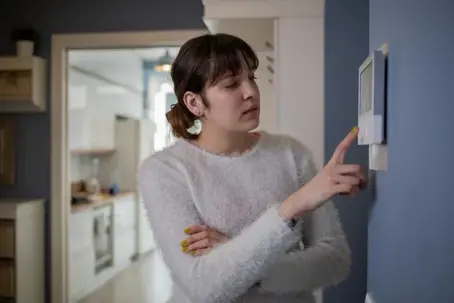
Sometimes the most frustrating heating issues have the simplest solutions that are easy to overlook during a busy day. Your thermostat is the “brain” of your system, and if it isn’t communicating correctly, the whole house stays cold. Before assuming you need a major repair, it is always a good idea to check the settings and power source of this small but vital device.
Checking these simple items first ensures you aren’t overlooking a quick fix that doesn’t require any tools or professional help.
- Test the display: If the screen is dark, replace the batteries with a fresh pair of lithium batteries; many systems won’t run at all if the thermostat's power is low.
- Verify the mode: Ensure the system is set to “heat,” rather than “cool” or “off,” and set the fan to “auto” to prevent cool air from blowing when the system isn’t heating.
- The 5-degree rule: Temporarily turn the temperature up 5 degrees higher than the current room temperature to see if you hear the system kick on.
Restoring Airflow Through Filter Maintenance
If your heater is running but the house still feels chilly, the problem is often related to restricted airflow. A clogged air filter makes your system work much harder than it was designed to, which can lead to overheating. When a system gets too hot, it will shut itself down as a safety precaution to prevent damage to the internal components.
Maintaining clear pathways for air to move is one of the most effective ways to keep your energy bills lower and your indoor air quality higher. When air can’t circulate properly, your heater stays on longer to try to reach the desired temperature, which puts extra wear and tear on the blower motor. Checking your filter is a great way to provide a safety net for your equipment’s longevity. Here's what to do:
- Perform a light test: Hold your air filter up to a light; if you cannot see light through the fibers, the dust buildup is thick enough to block airflow.
- Inspect the intake: Walk through your rooms to ensure that rugs, furniture, or heavy curtains are not covering the floor or wall vents.
- Check the direction: Look for the arrow on the side of your filter and ensure it points toward the furnace unit, following the path of the air.
Investigating Strange Noises and Odors
It is normal to hear a few clicks or a gentle hum when your heat kicks on, but loud or sudden sounds are your system’s way of signaling trouble. If you hear banging, clanking, or high-pitched screeching, it usually means a mechanical part has come loose or a motor is struggling. Addressing these sounds early can prevent a small vibration from turning into a major mechanical failure during a cold snap.
Smells can also tell a story about the health of your heating equipment and your home’s safety. A faint “dusty” smell during the first few uses of the season is usually just dust burning off the heat exchanger. However, persistent burning odors or the smell of sulfur should never be ignored, as they can indicate electrical issues or gas leaks.
Checking Power Switches and Circuit Breakers
Your heating system relies on electricity to power the blower motor and the control board, even if you use gas for your heating. If a circuit breaker trips or a switch is flipped, the entire system will go silent. This is a common issue that can happen if there was a recent power surge or if someone was working near the unit.
Locating the power sources for your heater can save you a lot of time and worry. Most systems have a dedicated switch that looks like a standard light switch located right on the side of the furnace or on a nearby wall. If this switch is flipped down, the system is essentially “unplugged” and will not respond to the thermostat.
To restore power to your system, follow these specific steps to check your electrical connections and safety switches:
- Reset the breaker correctly: Look for a switch in your main electrical panel labeled "furnace" or "HVAC" that is sitting in the middle; you must flip it all the way to "off" before clicking it back to "on" to reset the connection fully.
- Identify the service toggle: Locate the switch on the side of your furnace that looks like a standard light switch and ensure it is flipped up; these are often accidentally turned off during routine cleaning.
- Inspect the emergency float switch: Check the small plastic switch located on the drain pan under your unit; if the pan is holding water, this switch will automatically kill power to prevent water damage to your floors.
- Check the furnace door panel: Ensure the metal cover on your furnace is pushed in completely, as a safety "interlock" switch will prevent the system from starting if the door is even slightly loose.
Troubleshooting Heat Pump Performance Issues
If your home uses a heat pump instead of a traditional furnace, there are a few unique things to look out for. Heat pumps work by moving heat from the outside air into your home. During very cold weather, it is common for the outdoor unit to develop a light layer of frost, which the system melts away during a regular “defrost cycle.”
However, if the outdoor unit is completely encased in a thick block of ice, the system cannot function properly. You may also notice your thermostat switching to “auxiliary heat” or “emergency heat” more often. While this is normal in extreme cold, constant use of backup heat can lead to much higher utility costs if the main unit isn’t performing its job correctly.
Be sure to:
- Clear the perimeter: Ensure there is at least two feet of clear space around your outdoor unit, removing leaves, snow drifts, and tall weeds.
- Check for dripping: Look above the unit to make sure gutters aren’t leaking water directly onto the fan, which can cause excessive freezing.
- Inspect the fins: If the metal coils on the outside unit are clogged with dirt or grass clippings, the system can’t pull heat from the air effectively.
The Value of an Expert Assessment
While basic troubleshooting can solve many minor issues, professional knowledge is necessary when technical problems affect your system's safety. A technician has specialized tools to perform deep cleanings and safety checks, such as inspecting the heat exchanger for tiny cracks. These cracks are invisible to the naked eye but are critical to catch, as they prevent dangerous carbon monoxide from entering your living space.
If your troubleshooting steps haven't restored your warmth, or if you are dealing with complex furnace repair or heat pump services, we are here to help. At Brozwood, we specialize in providing honest assessments and ensuring your system is running at peak efficiency. We offer a 1-year labor warranty and free second opinions to ensure you receive a fair price and the most effective solution for your home.
Ensuring Your Home Stays Warm This Winter
Managing heating problems can feel like a heavy burden, but many issues start with small things like a dead battery or a dusty filter. By keeping an eye on your system and staying on top of monthly filter changes, you can handle the basics with confidence. However, when the problem involves gas lines, complex electrical wiring, or deep mechanical failures, professional assistance is the safest path forward for your home and family.
If your heating system is acting up, we are here to help. Contact us today or call us at (385) 396-7105 to get your home back to a comfortable temperature.
Ready for a warm, worry-free winter? Get in touch with our friendly team for an honest assessment of your heating system. Book an appointment with us or call us directly at (385) 396-7105.